Pregnant Wife Went Missing—Then the Billionaire Broke Down in Front of the Woman Who Ruined Him
Part 1: The Hollow Life
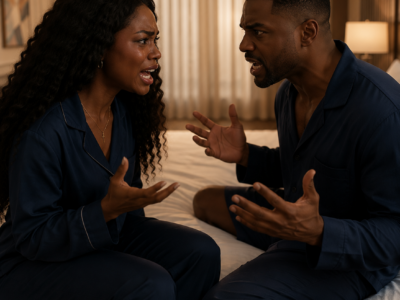
There is a kind of loneliness that only exists inside a beautiful life. It doesn’t announce itself; it doesn’t knock. It simply settles into the spaces between things. It lives in the “good morning” that sounds right but feels hollow. It thrives in the hand that reaches for yours but never quite closes its fingers around your own. It is the quiet, crushing devastation of knowing in your marrow that the structure you are living in—the one that looks like love from the outside—has already ended.
Sakura Harlo knew this loneliness. She had carried it for six months before she could even name it. She was a filmmaker, a woman whose entire career was built on the discipline of watching. She knew how to notice the micro-expressions people tried to hide; she knew how to read silence the way other people read dialogue. And Sebastian Harlo, her husband—the man she had loved with a fullness that once embarrassed her—had been broadcasting silence for half a year.
It wasn’t a sudden explosion. It was a tide pulling back from the shore, so gradual that some mornings she woke up wondering if she were merely imagining the distance. Maybe she was hormonal. Maybe he was just under the suffocating pressure of his new Tokyo deal. Maybe this was what happened to marriages when a pregnancy finally arrived after three years of trying and two devastating, hollow-eyed losses.
She told herself those things because they were easier to live with than the alternative. But Sakura was better at watching than she was at lying.
The phone was the first concrete thing. Sebastian had always been attached to his device; it was the nature of his world, Harlo Capital Group. But there is a difference between a busy man and a hiding man. A busy man glances at his phone. A hiding man flips it face-down the moment you enter a room. Sakura noticed it for the first time in mid-September. She had walked into his home office with coffee, an old habit from their early days, and the phone had hit the mahogany desk face-down before she’d even cleared the doorway.
“Who were you texting?” she had asked.
“Patrick. Board stuff. You know how it is,” he had said, offering an easy, relaxed smile that didn’t reach his eyes.
She hadn’t gone back in to point out that Patrick Drummond famously refused to use personal phones for anything. She had simply gone to the kitchen, stood at the window, and watched the city far below. She filed that information away. That was what she did: she filed things quietly, without revealing the filing.
The name appeared two weeks later. She wasn’t snooping; she had never been that kind of person. She had always believed that if you had to go looking, the marriage was already dead. But Sebastian had left his laptop open on the kitchen island. Sakura walked past to get a glass of water, and her eyes landed, without intention, on a subject line in the preview panel: Natalie Voss dinner Thursday confirm.
She didn’t react. She poured her water, went back to the living room, and sat down. Natalie Voss. She turned the name over in her mind like a stone. A quick search revealed a 30-year-old Harvard MBA, a managing director of a boutique firm, photographed at industry galas in dresses that cost more than a mid-level sedan. Beautiful, educated, adjacent to his world.
That night, lying in the dark beside a man who hadn’t initiated physical intimacy in eleven weeks, Sakura breathed carefully. She counted what she knew: a name in an email, a face-down phone, a husband who showered the second he walked through the door. She counted the silence.
She pressed her hand against her belly. Audrey, their long-awaited daughter, moved in a slow, rolling wave.
“I’ve got you,” Sakura whispered into the dark, three feet away from the man she no longer knew. “Whatever this is, I’ve got you.”
The next morning, she called Diane Mercer, the only person who had held her through the two previous miscarriages. Diane was a family attorney with a lawyer’s ear for the space around words. When Sakura finished laying out the facts, the silence on the other end lasted exactly four seconds.
“Tell me what you’ve seen,” Diane said, not asking if Sakura was sure, but asking for the proof.
Sakura told her everything. When she finished, Diane was quiet for a long moment. “I want you to call Glenn Tasker,” Diane said. “If this is what you think it is, you need documentation. Not for revenge. For protection. You need to know what you’re dealing with before you move.”
Sakura agreed. She met Glenn Tasker, a former FBI investigator, at a Midtown cafe. He didn’t take notes. He listened with the stillness of a predator. By the end of the meeting, he had a task. By the end of the month, he had a timeline.
The evidence was methodical. Meeting patterns, hotel records, arrivals and departures. But the detail that finally broke something in Sakura wasn’t the affair itself—she had known that was coming—it was the practice. The way they moved in and out of the hotel through different entrances to avoid being seen. It meant they had a system. It meant they were comfortable.
And then, she found the folder in the nursery.
Part 2: The Nursery Folder
Sakura found the folder tucked beneath the floorboards in the nursery closet—a space Sebastian hadn’t touched since the shelving was installed. It wasn’t just hotel records. It was a ledger of a second life.
There were documents detailing legal strategies to isolate her financially, draft documents regarding a “discreet separation,” and a handwritten note on a legal pad that made the room spin: Wait until after the birth. Use the PPD narrative. It’s cleaner.
The acronym stood for Postpartum Depression. He wasn’t just having an affair; he was building a legal case to paint her as unstable to ensure he would get sole custody of Audrey. He had been planning this for months, watching her move through the house, watching her rub her belly, all while keeping a checklist of how to strip her of her daughter.
Sakura didn’t scream. She didn’t throw the folder across the room. She stood in the middle of the nursery, surrounded by the soft pastel colors and the mobile she had spent hours choosing, and felt the loneliness finally crystalize into something hard and indestructible.
She wasn’t a victim anymore. She was a woman who had been warned.
She went to the kitchen and called Diane. “I need to move,” Sakura said, her voice shaking with a cold, terrifying clarity.
“Is it that bad?” Diane asked.
“It’s worse. He’s planning to use the baby against me.”
“Okay,” Diane said, her tone switching into a rapid-fire legal mode. “We start the exit strategy today. You need to move your personal archives, your backup hard drives, and everything that proves the intellectual property is yours. Do not let him see you change. Do not let him see you stop being the ‘furniture.'”
For the next three weeks, Sakura lived a performance that would have won an Oscar. She continued to cook his dinners. She continued to listen to his lies about “Patrick” and “Board meetings.” She slept beside him in the penthouse, listening to his rhythmic breathing while her mind worked in the dark, moving digital assets, creating encrypted backups of her original source code, and slowly, methodically, clearing out the things that mattered.
She wasn’t taking jewelry. She wasn’t taking art. She was taking the evidence of who she was.
Every night, she would stand in the nursery and whisper to the baby. “We’re going to be okay. We are leaving this house, and we are never looking back.”
Sebastian, for his part, was a man in the full grip of his own hubris. He believed he was managing the perfect exit. He believed he was the architect of her destruction. He would come home, kiss her cheek, and spend hours in his office “working,” unaware that the woman he was trying to erase had already deleted him from her future.
One evening, he came home earlier than usual, flushed with the success of the Tokyo deal. “Sakura, honey, get your coat. I booked us dinner at that new place in SoHo.”
She looked at him, her heart hammering against her ribs. She was three days away from the departure date she and Diane had settled on.
“I’m actually feeling quite tired, Sebastian,” she said, pulling the gray cardigan tighter around her bump. “The baby has been active all day. Maybe another time?”
He looked at her, and for a split second, a flash of genuine annoyance crossed his face. He didn’t care about the baby’s activity; he cared that he had made a plan and she was disrupting his need to maintain appearances.
“You’re always tired lately,” he muttered, turning to his desk.
“I’m growing a human, Sebastian,” she replied, her voice soft but steady.
“Right,” he said, already on his phone. “Well, enjoy the quiet.”
She went to the bedroom and sat on the bed. She realized then that he wouldn’t even notice if she disappeared for twelve hours at a time. He was so wrapped up in his own theater that he had become completely blind to the audience.
She waited until he was in the bathroom, the shower running, and then she walked into the living room. She took the photo of them—the one taken in the Maldives three years ago—off the mantelpiece. She looked at it for a long time. They looked so happy. Or rather, she looked happy, and he looked like a man who knew how to pose for a camera.
She put the photo face-down in the trash.
The day before the exit, she received a call from Glenn Tasker. “I have it,” he said. “The final piece. The hotel room has a security camera in the hallway. I got the footage. Natalie Voss is there, and she’s carrying a bag that matches the one Sebastian bought her last month. It’s all there.”
“Thank you, Glenn,” Sakura said.
“Sakura, when you leave, go straight to the airport. Do not stop. Do not tell him where you are going. Diane has the private security team ready to meet you at the terminal.”
“I’m ready,” she said.
She hung up and looked at the clock. 11:45 PM. Sebastian was asleep. The final countdown had begun.
Part 3: The Note
The morning of the departure was colder than the others. December light, thin and jagged, was just beginning to touch the skyscrapers of Manhattan. Sakura was up at 5:00 AM. She had dressed in layers, her movements silent, practiced. The duffel bag was already in the trunk of the car she’d hired weeks ago—a car that was waiting three blocks away to avoid the doorman seeing her with luggage.
She stood in the center of the living room. It felt like she was standing on the stage of a play where the curtain was about to fall. She walked to the nursery one last time. She placed her hand on the crib.
“It’s time,” she whispered.
She went to the kitchen. She pulled out a plain, heavy-stock notecard. Her hand was steady. She didn’t write a long, impassioned letter. She didn’t beg for an explanation. She didn’t waste her energy on someone who couldn’t hear her.
She wrote:
I know about Natalie. I know about the hotel. I am leaving to protect myself and our daughter. Do not look for me. I am safe.
She walked back to the bedroom. Sebastian was deep in the sleep of the arrogant—the sleep of a man who believes he has won the game. She placed the card on his pillow.
She turned and left the room. She didn’t look back. She walked to the elevator, her heart beating a steady, rhythmic cadence. When the elevator reached the lobby, she walked out into the cold, gray morning. The city was just beginning to breathe. The air felt cleaner than it had in years.
She found the car. She got in.
“Airport,” she said to the driver.
“Yes, ma’am.”
As the car pulled into the stream of traffic, Sakura looked out the window. She saw the penthouse building, the thirty-floor glass monument to her husband’s ego. She didn’t feel fear. She didn’t feel regret. She felt the weight of the last nine years falling away, leaving her hollow, light, and finally, completely real.
Sebastian Harlo woke up at 7:53 AM.
He reached across the bed, his hand grazing the empty space. He didn’t think much of it. She often woke early. He lay there for a moment, organizing his day—the Tokyo call, the risk team review, the lunch he had told Patrick to block off.
He rolled over and saw the card.
He almost didn’t pick it up. He thought it was a grocery list or a reminder about calling his mother. But something in the stillness of the room—a strange, heavy silence that felt different than the usual morning quiet—made his skin prickle.
He picked it up. He read it once. He read it again.
And then, Sebastian Harlo, CEO of one of the most powerful capital groups in the world, a man who had never lost his composure in a boardroom, sat on the edge of his bed in his pajamas and felt the world tilt.
He stood up, then sat back down. The card felt like lead in his hand. She knew. She had known for weeks, maybe months. She had sat across from him, shared meals, watched him, and let him continue his charade while she built her own exit.
He called her phone. Voicemail.
You’ve reached Sakura Harlo. Please leave a message.
“Sakura?” His voice was rough, unmoored. “Call me back. Please. We need to talk.”
He hung up. He called again. Voicemail.
He stood in the middle of the silent penthouse. The city noise drifted up thirty floors, indifferent to his existence. He had spent his life managing perception, controlling the narrative, and he had just realized that the only person whose opinion actually mattered had been watching his play with the critical eyes of a filmmaker, cutting his footage, and walking out before the finale.
He went to the nursery. He sat on the floor, surrounded by the pastel decor and the mobile that looked like a mocking reminder of everything he had lost.
At 9:45 AM, Patrick called. “Everything is cleared, Sebastian. What happened?”
Sebastian looked at the mobile turning slowly in the draft. “Sakura left,” he said.
“What do you mean, left?”
“She found out. She knows everything.”
Patrick was quiet. The silence on the other end of the line was the sound of a man realizing his boss’s foundation had just collapsed.
“Oh, God,” Patrick whispered.
“Yeah,” Sebastian said. “She was three steps ahead of me the entire time, and I didn’t even know the race had started.”
Part 4: The Legal Siege
The next 48 hours were a blur of cold coffee and silence. Sebastian did not leave the penthouse. He couldn’t. The apartment, once a symbol of his status, felt like a museum of his own hubris. He spent the hours sitting in the nursery chair, the same one Sakura had chosen, the same one she had spent hours deliberating over in a baby store while he was busy “negotiating” in a hotel room with Natalie Voss.
He had expected a barrage of calls from Sakura. He had expected her to scream. He had expected her to demand money, to threaten him with the press, to make a scene. But there was nothing. Just the silence of a woman who had already moved on.
On the third day, he finally called an attorney. Richard Callaway, a man who had seen every version of a messy divorce, listened to Sebastian’s rambling explanation with the detachment of a surgeon.
“Tell me about the prenuptial agreement,” Callaway said.
Sebastian paused. “It’s airtight. I had it drafted with an infidelity clause.”
“Was there an infidelity clause?” Callaway asked, his voice flat.
Sebastian searched his memory. Nine years ago, he had been so focused on protecting the empire that he hadn’t thought about the possibility that he would be the one to break it. “I don’t remember.”
“I’ll need to see it.”
Callaway called back an hour later. “It’s not just an infidelity clause, Sebastian. It’s a penalty clause that’s enforced by clear, convincing evidence of a sustained affair. If she has documentation, you’re in a very difficult position.”
“She doesn’t have documentation,” Sebastian said, his voice regaining its corporate certainty. “I was careful.”
“She’s a filmmaker, Sebastian,” Callaway replied. “She’s been trained to document the world around her for fifteen years. I wouldn’t bet against her.”
Sebastian hung up and looked at his phone. He wanted to call Sakura again. He wanted to explain. He wanted to tell her that it hadn’t meant anything, that it had been a mistake, that he was under pressure. But he looked at the note on his nightstand—Do not look for me. I am safe—and he realized that every time he reached out, he was only proving her point. He was only proving that he still didn’t respect her boundaries.
He didn’t call.
Instead, he did the only thing he knew how to do: he worked. He threw himself into the Tokyo deal with a frenzy that bordered on madness. But every time he opened a spreadsheet or answered an email, he saw her. He saw her eyes, her calm, steady, filmmaker’s eyes, watching him, recording his failures.
The gossip started on Day 19. It wasn’t the full truth yet, but the whispers had begun. The Harlos are having a difficult time. Sakura has stopped appearing in public.
Sebastian read the blogs, the articles, the speculation, and felt a strange, detached relief. The mask was slipping. The public version of Sebastian Harlo—the happy, successful, visionary husband—was dying. And for the first time, he didn’t care about the reputation management. He only cared about the empty chair at the dinner table.
One evening, Patrick came over with food. He didn’t ask questions. He didn’t offer advice. He simply sat down and opened the quarterly financial reports.
“Do you think she’ll come back?” Patrick asked quietly.
Sebastian looked at the window. The city lights looked like thousands of tiny, distant stars, uncaring and beautiful.
“No,” Sebastian said. “Not to this. Not to what we were. That’s over.”
“Do you want her to?”
Sebastian thought about the question. He thought about the man he had been a month ago—the man who would have wanted her back as a trophy, as a prop, as a piece of his life he hadn’t finished managing. Then he thought about the man sitting in the dark of a nursery, realizing he had broken the only thing that had ever made him feel alive.
“What I want doesn’t matter right now,” he said. “What matters is Audrey.”
Patrick nodded slowly, his eyes reflecting the soft glow of the kitchen lights. “That might be the first responsible thing I’ve ever heard you say.”
Part 5: The Arrival
The call came at 11:42 PM on Day 31. Sebastian was awake, as always, sitting in the nursery chair. His phone screen lit up with the name Diane Mercer.
“She’s in labor,” Diane said. Her voice was different, softer, more human. “It started two hours ago. She wanted you to know.”
Sebastian’s hand tightened on the phone. “Is she okay? How is she?”
“She’s strong, Sebastian,” Diane said. “She’s very strong. Everything looks good. It’s going to be a while yet.”
Sebastian wanted to ask if he could come, but he knew the answer. Sakura hadn’t invited him. She had just informed him. He took a long, steadying breath. “Tell her… tell her I’m glad she’s safe.”
“I will,” Diane said, and hung up.
He sat in the dark. He didn’t pray; he had never been a praying man. But he put the entire weight of his hope into the direction of Vermont.
The call came at 4:57 AM.
“She’s here,” Diane said, her voice full and rich. “Audrey Rose Harlo, seven pounds, two ounces. She’s perfect. She’s loud.”
Sebastian’s shoulders dropped. The rigid containment he had been holding together for a month just… released. He felt the tears finally come, not in a dramatic, cinematic way, but as a silent, unstoppable tide.
“Is she healthy?” he managed to choke out.
“Completely healthy,” Diane said. “And Sakura is incredible. You should know that.”
“Thank you for being there with her.”
He hung up and sat in the nursery until the city began to lighten. He felt the weight of everything he had lost—the marriage, the trust, the time—and everything that had just arrived. His daughter was here. She was real. And she had come into the world without him.
He took out his phone. He opened a new message to Sakura. He typed four words: I’m glad you’re safe.
He stared at them. He felt the urge to add more—I love you, I miss you, I’ll change—but he knew those words were cheap. He knew he hadn’t earned the right to say them. He deleted the message.
He decided to wait.
Two weeks later, Patrick arrived at the penthouse. He stood in the nursery doorway. “What are you going to do?”
“I’m going to book a flight,” Sebastian said.
Patrick said nothing.
“And then,” Sebastian added, “I’m going to cancel it. Because she didn’t ask for me. And until she asks for me, the most decent thing I can do is stay exactly where I am.”
Patrick looked at him for a long time. “That might be the first time I’ve ever seen you choose someone else’s need over your own impulse.”
Sebastian said nothing. He felt the truth of it. He felt the cost of sitting still when every instinct in him was screaming to go to Vermont and stand in a doorway. He was learning that patience was not passivity; it was a form of action.
On Day 53, the magazine profile ran. It was everything Callaway had warned him it would be. Beautifully written, deeply reported, and devastatingly honest. Sakura’s voice was in it—clear, precise, and filled with a quality of grief that made it recognizable to everyone who read it.
She didn’t name him directly, but she described the specific moral injury of becoming invisible inside your own marriage. She described what it felt like to stop mattering.
Sebastian read it three times. He didn’t defend himself. He didn’t call the magazine. He sat with it, letting the truth wash over him, letting the discomfort exist without trying to manage it.
He went to his desk and wrote a letter. He wrote it three times before the words were right.
Sakura, I read the piece. I won’t pretend I found it easy. But I want you to know that I found it true. You had the right to say it. I am not asking for anything. I am telling you what I intend: I intend to earn the chance to be her father in ways that matter. Whatever that takes.
He addressed it to Diane’s office. He sealed it. He sent it. Then he sat back and felt the weight of an action that required everything he had, with no guarantee of an outcome.
Part 6: The West Village Apartment
On Day 60, Sakura began the logistical work of returning to New York. She sat in the Vermont house with a legal pad, listing what she needed for a new life. She didn’t want the penthouse. She didn’t want the ghosts of her marriage.
She wanted human-sized.
She signed the lease on a West Village apartment with a garden and high ceilings. It was a space that felt like her—quiet, purposeful, and honest. As she signed the papers, with Audrey strapped to her chest, she felt the return of her own taste, her own eye. For nine years, she had been living in Sebastian’s aesthetic. This was her own.
“This is the right one,” she told Diane.
She called Kenji Takahashi, her old producer. They set a meeting for the following Tuesday.
“I have an idea,” she said. “I’m not making a film about this, but I want to make a film about the women who rebuild. I want to tell the story of what happens when the life you thought you were living turns out to be a lie, and you start over.”
Kenji was silent for a moment. “That sounds like you, Sakura.”
“I think it is me,” she replied.
When Sebastian found out she was back in the city, he didn’t run to her. He didn’t drive past her street. He was working every single day to not be that man. He called Dr. Morse.
“She’s back in New York,” he said.
“How does that feel?” Morse asked.
“Like the city got smaller and larger at the same time,” Sebastian said. “Like there’s someone in the room, but the room is enormous.”
“Are you going to reach out?”
“No. Not yet. She hasn’t indicated.”
“That’s a significant shift in how you think about restraint,” Morse noted.
Sebastian thought about the cost. Everything. It had cost him everything to get to a place where he could just sit with his own impulses and let them pass.
On Day 91, the first real contact happened. A text message.
Audrey has a well-visit next Thursday at 2 PM. If you want to be there, I’ll send the address. You would need to arrive separately and leave separately. No conversation beyond what’s necessary for the appointment. I’m offering this because she is your daughter and deserves a father who shows up.
Sebastian read it three times. He felt his heart do something violent and immediate. He typed one sentence back: I’ll be there. Thank you.
The pediatric office on the Upper West Side was cold. When he walked in, Sakura was already there, holding Audrey. The baby was wearing a yellow outfit he had never seen before—a small, sharp reminder of how much he had missed.
“Sebastian,” she said.
“Sakura.”
They didn’t touch. They didn’t try to fill the silence. They walked through the appointment like two people who had a single, shared goal: the health of their daughter.
When he held Audrey for those two minutes, he felt something permanently rearrange itself. She grabbed his finger with the complete, unreserved grip of a four-month-old, and he felt a direction—a fixed point—emerge from the wreckage of his life.
He handed her back. “She’s going to be okay,” Sakura said.
“Yeah,” he said, his voice rough. “We’re going to make sure of that.”
“Both of us,” Sakura said. “In our separate ways.”
He stood on the sidewalk and watched her drive away. He didn’t call after her. He didn’t follow. He felt the weight of the restraint, and he carried it with him like a badge.
Part 7: The Beginning of the Real
Three months later, Sakura’s new project entered development. The working title was simply After. It was her best work yet, a story about the women who start over when the truth finally catches up to them.
Sebastian sold the penthouse. He didn’t wait for the market to peak; he didn’t negotiate for the highest possible price. He just sold it to get out. He moved to a small, two-bedroom apartment in Tribeca. He put up the framed print of Audrey in the nursery he had built—a room that wasn’t a museum of his ego, but a place for a child who was growing up in a world where her parents were finally, painfully, learning to be human.
The final settlement was signed on a Tuesday. Diane called Sakura. “He agreed to every term, Sakura. Without a single pushback.”
“I know,” Sakura said.
“How are you doing with it?” Diane asked. “The legalities are finished. The distance is set.”
Sakura looked at the wall, at the photographs she had taken for herself, the ones she had never felt allowed to display in the penthouse. “I’m not forgiving him,” she said. “But I’ve arrived at something like understanding. I can see the whole shape of it without the seeing destroying me.”
“That sounds like hard-won clarity,” Diane said.
“It is.”
The first visit at the apartment came in late March. Sakura opened the door. Sebastian stood there, no flowers, no gifts, no performative gestures. Just a man who had thought very carefully about how to be present without taking up too much space.
“Thank you for this,” he said.
“Come in,” she replied.
Audrey was on the playmat. When Sebastian entered, he didn’t look at Sakura. He went straight to his daughter. He crouched down. “Hey, you. I missed you.”
Audrey grabbed his finger. Her grip was astonishing—a small, perfect circle of commitment. Sebastian made a sound that wasn’t a word—the sound of a man being undone, not by ego, but by love.
Sakura watched from the kitchen. She listened to the low, continuous narration of his voice as he told their daughter about the world. She made coffee. She breathed. She let it be what it was.
In the other room, Audrey kept hold of his finger.
The chaos of the past year had not ended; it had simply changed shape. It wasn’t the tidy redemption arc that movies promised. It was something harder, slower, and completely real.
Sebastian looked up from the floor, and their eyes met. No warmth that promised more than she intended. No coldness meant to punish. Just the clear, steady, accurate look of two people who had survived the worst of each other and were now trying to figure out how to exist in the same reality.
“She’s going to be okay,” Sakura said.
“Yeah,” Sebastian replied, his voice firm. “We’re going to make sure of that.”
“Both of us,” Sakura said. “In the ways we each can.”
She turned away to give him his time, walking into the living room where the light from the garden flooded the space. She felt the weight of the last year—the loneliness, the silence, the discovery, the rebuilding—and she realized that for the first time in her life, she was exactly where she was supposed to be.
She was a person on the other side of the worst thing that had happened to her, and she was building something new, something that was entirely, completely hers.
She sat down with her notebook and opened it to a blank page. She started to write. Not about him, not about the past, but about what Audrey would need next. About the world they were going to show her. About the integrity of the life she was creating.
The door to the other room stayed open. The sound of Sebastian’s voice drifted in, a soft, steady hum. Sakura smiled—a small, private thing—and kept writing. She was the architect now, and for the first time, she was building for someone who deserved it.
The story was still being written, but for once, the ending was hers to shape.