Seven Months of Lies: The Mafia Prince Who Thought He Was in Control Until He Found His Abandoned Lover at Death’s Door
Part 1: The First Breath of Winter
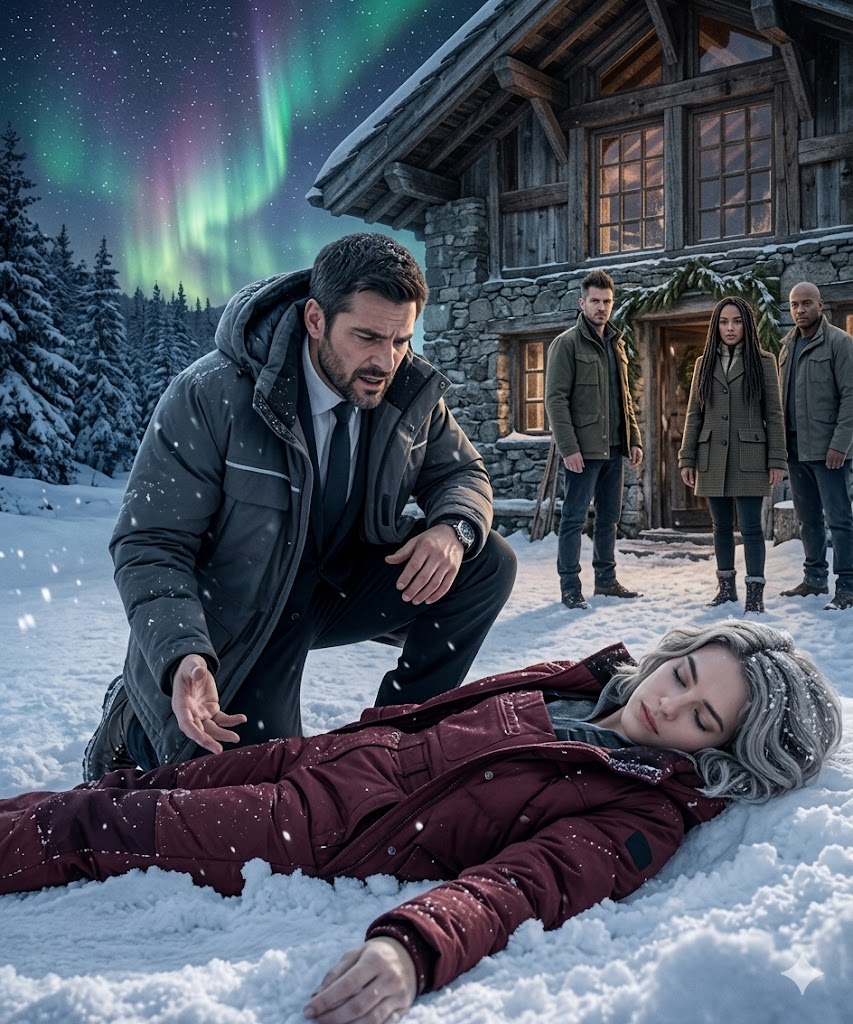
At 11:42 on New Year’s Eve, while Chicago’s richest men laughed beneath crystal chandeliers and counted the minutes until midnight, Dominic Moretti found his secretary half-buried in snow outside his own tower. She was wearing a thin wool coat, soaked through to the lining. Her lips were blue. Her eyelashes were crusted with ice. And when the most feared man in Illinois dropped to his knees beside her, the entire sidewalk went silent. Because Dominic Moretti did not kneel. Not for judges. Not for senators. Not for priests. But he knelt in the snow for Emma Clarke, pulled her shaking body into his arms, and roared so loudly that even the armed men at the entrance took a step back.
“Who let her leave alone?”
No one answered. Dominic’s face changed then. The cold, beautiful mask he wore for the world cracked wide open, and what came through was something darker than anger. It was terror. “Emma,” he said, his voice breaking against her frozen hair. “Open your eyes. Look at me.”
I tried. I truly tried. But the snow felt warm by then. That was the dangerous part, I would learn later. When the body grows too cold, it stops fighting. It stops screaming. It starts whispering lies. Rest here. Close your eyes. Just for a minute.
Before that moment, I had spent two years making sure Dominic Moretti never had a reason to notice me for the wrong thing. I was his executive secretary, though everyone in the building knew the title was too small for what I did. I managed his calendar, screened his calls, corrected contracts, rerouted disasters, remembered who hated whom, who owed money, who was lying, who should never be seated near the windows, and which visitors needed to pass through the private elevator without signing in. Dominic owned hotels, clubs, freight companies, construction firms, and restaurants across the Midwest. On paper, he was a businessman. In reality, he was the man other powerful men lowered their voices around. People called him charming when they wanted something from him. They called him ruthless when they thought he could not hear. They called him Mr. Moretti to his face. I called him sir. Always sir. Because some lines existed for survival.
That morning, December 31, Chicago was glittering beneath a thin layer of frost. Lake Michigan looked like black glass, and the sky had the hard gray color of metal. The Moretti Tower stood forty stories above the Loop, all tinted windows and steel, with a private residence on the top floors and an executive office beneath it. Dominic’s annual New Year’s Eve party was famous in a way people pretended not to talk about. Politicians came. Judges came. Real estate kings came. Women in velvet gowns came laughing on the arms of men who looked over their shoulders too often. I was not invited. I never was. I told myself I did not care.
At 5:15, most of the staff had already gone home. The lobby smelled like pine garland and perfume. The catering team was loading silver trays into the private elevators. Somewhere above me, a jazz quartet was warming up. I sat alone outside Dominic’s office, sorting through a stack of contracts he had left on my desk. A yellow sticky note sat on top, written in his sharp black handwriting: Handle when you can. D.M. That was all. No please. No thank you. No deadline. But I knew Dominic. He did not leave things unless they mattered. He did not tolerate unfinished work. And I had built my whole fragile sense of value on being the person who never made him ask twice. So I stayed.
At 7:30, my roommate, Lily, texted me: Where are you? We’re going to Millie’s. Come celebrate like a human being.
Soon, I replied.
At 8:50, the party upstairs began in earnest. Music pulsed through the ceiling, low and elegant. Laughter spilled from the private lounge when the doors opened. I could hear champagne corks, heels clicking on marble, voices warm with money. At 9:25, Marco DeLuca, Dominic’s oldest associate, appeared in the doorway. Marco was in his late forties, broad-shouldered, silver at the temples, with the weary eyes of a man who had seen too much and survived by noticing everything.
“Emma?” he said, surprised. “What are you still doing here?”
“Finishing up a few things.”
“Dominic released the staff hours ago.”
“I know. I’m almost done.”
He glanced at the papers. “Contracts?”
“Yes.”
Marco frowned. “Those aren’t for tonight.”
“They were on my desk.”
He looked as if he wanted to say something, then thought better of it. That was common in Dominic’s world. People swallowed half their sentences to stay alive. “Go home,” Marco said finally. “It’s New Year’s Eve.”
I smiled politely. “I will.”
But I did not. By 10:18, my shoulders ached from leaning over legal language. My coffee had gone cold. My phone battery was at sixteen percent. I arranged every document by priority, attached notes, flagged signature pages, and placed the neat stack in the center of Dominic’s desk. His office was empty. Beyond the glass wall, I could see the party in the private ballroom. Dominic stood near the bar, sleeves rolled to his forearms, black shirt open at the collar, tattoos showing beneath the cuff. He was laughing at something a red-haired woman in a silver dress had said. Dominic Moretti was beautiful in the way a storm is beautiful from far away. Dangerous. Electric. Impossible not to watch. He looked over suddenly. Our eyes met through the glass. For one foolish second, the world narrowed to his gaze. Then the red-haired woman touched his arm, and he turned away, leaving me in the dark office, watching a life I could never touch.
Part 2: The Exit Strategy
The cold was an insidious thing. It didn’t just bite; it crept. By 10:45, the central heating in the executive wing had been dialed down to save energy for the ballroom. I walked to the glass doors of the elevator lobby, watching the elevators glide silently past me, carrying guests in furs and tuxedoes to the penthouse. I felt like an artifact from a different era, a ghost hauntng a machine of glass and steel. My coat was still in the locker room three floors down, but the elevator wouldn’t stop for me—not without a key card that had been deactivated at 9:00 p.m. for all non-party staff.
I was trapped.
I could have called Marco, but I didn’t want to admit I was stuck. I didn’t want to admit I had stayed past the deadline, or that I had been staring at Dominic through the glass like a lovestruck intern. The humiliation of being “stuck” was less than the humiliation of being seen.
I took the stairs. Forty flights of concrete and steel echoed with the sound of my sensible heels. By the time I reached the ground floor, my legs burned and my breath came in short, ragged gasps. The lobby was abandoned, the security guards having moved to the perimeter for the high-profile arrivals. I slipped out the side entrance, thinking I could walk the four blocks to the train station.
The wind hit me like a physical punch. Chicago in late December isn’t just cold; it’s a living thing that wants to hollow you out. I pulled my thin wool coat tighter, realizing too late that it wasn’t enough. The snow was falling in heavy, wet clumps, obscuring the streetlights. Every step felt like walking through deep water.
I made it two blocks before I felt the first real sting of frostbite. My fingers, exposed to the air as I checked my phone, went numb almost instantly. 11:15 p.m. The train station was still two blocks away, but the distance seemed impossible. My phone died with a pathetic little flicker. No Uber, no call, just the biting wind and the growing dark.
I tried to speed up, but my boots slipped on a patch of black ice. I went down hard, the impact jarring my teeth. I sat there in the gutter, the snow swirling around me, feeling a strange, seductive lethargy. It would be so easy to stay. The snow was soft. The wind sounded like a lullaby.
Get up, Emma.
I pushed myself to my feet, but my knees were shaking so violently I nearly collapsed again. I crawled toward the shelter of a building alcove, but the iron gate was locked tight. There was no shelter here. Just the cold.
The lights of the Moretti Tower loomed above me, a monolith of indifference. Somewhere inside, Dominic was laughing, sipping scotch, dancing with the red-haired woman. He was warm. He was safe. He was completely unaware that the person who organized his entire existence was currently vanishing into the Chicago winter.
I closed my eyes for a moment. Just a minute. Just until the shaking stopped. The cold was a blanket now, thick and heavy. I didn’t feel the ice on my eyelashes. I didn’t feel the snow piling up on my shoulders. I felt… peaceful.
Then, a sound.
Tires.
A black SUV, low-profile and menacing, pulled to the curb. Doors opened. Heavy footsteps crunched on the frozen pavement. Voices, low and sharp.
“Check the north side.”
“We’re looking for a package.”
I tried to move, to call out, but my throat was a desert. My tongue felt like a block of ice. I slumped back into the snow, the world narrowing down to the flickering streetlamp above me. I saw a pair of polished black boots step into my line of vision. A man leaned down, his face hidden in shadow.
“Found her,” he said into a radio.
I couldn’t hear the response. I couldn’t hear anything anymore. The last thing I felt was a hand on my shoulder—a heavy, calloused hand that felt like it belonged to someone else. I drifted, the city lights becoming pinpricks of color against the endless, beautiful black. I was tired. So incredibly tired.
And then, the roar. A sound like a wild animal, a voice that belonged to a man who had everything to lose and everything to prove, calling my name from the edge of the abyss.
“Emma!”
The sound vibrated through the frozen ground, through my bones, through the very heart of the storm. It was the only thing that kept me from letting go.
Part 3: The King in the Snow
Dominic Moretti did not run. He moved with a terrifying, fluid grace, ignoring the slush and the ice that threatened his footing. He didn’t care about the frozen slush ruining his tailored trousers or the snow sticking to the dark wool of his coat. He was focused on the small, crumpled shape lying against the iron gate of the shopfront.
The security team—the men who usually formed a human wall around him—fell back instinctively as he crossed the distance. They had never seen him look like this. The man who dictated the movements of the city from behind a desk was gone, replaced by something ancient and raw.
He dropped to his knees, his hands hovering over me for a split second, paralyzed by the sight of my pale, frozen skin. Then, he gathered me up, pulling my limp body against his chest, shielding me from the wind. His heat was a violent contrast to the ice clinging to my hair.
“Marco!” he barked, his voice echoing off the glass and steel of the tower. “Get the car! Get the heat on!”
Marco DeLuca, who had followed him out, didn’t argue. He signaled the driver, and the black SUV pulled closer, the door swinging open to reveal the warm, leather-lined interior. Dominic climbed in, cradling me as if I were a piece of fine crystal that might shatter at the slightest touch.
“Warmth,” he commanded the driver. “Now.”
The vents surged, filling the cabin with hot, dry air. Dominic kept his arms around me, his hands frantically rubbing my shoulders and arms, trying to force circulation back into my extremities. “Emma, listen to me. Don’t you dare do this. Do you hear me?”
His voice was a wreck. The composure he’d spent a lifetime perfecting had been burned away by the sight of me in the gutter. He pressed his forehead against mine, his eyes wild, searching for a sign of life. “Open your eyes. Look at me, Emma.”
I couldn’t. I was trapped in that dangerous, whispering dream. The warmth of the car was starting to hurt, a deep, aching throb in my fingertips and toes. It felt like needles were piercing my skin, a thousand tiny knives signaling that the blood was returning.
“She’s breathing, boss,” Marco said from the front seat, his voice subdued.
Dominic didn’t look at him. He didn’t look at anything but my face. He began to undo my coat, his movements frantic but careful, stripping away the wet wool to reach the warmth of my skin. “You were supposed to be home,” he muttered. “Why weren’t you home?”
He was angry. I could feel the tension in his muscles, the way his jaw worked against his own internal collapse. He wasn’t just mad; he was furious at the world, at himself, at the situation that had left me here to die.
“Marco, get the hospital on the line. Tell them to have a trauma team ready.”
“They’re already on notice, Dominic.”
“Not good enough. Tell them if she doesn’t survive the night, I’ll buy the hospital and tear it down brick by brick.”
It was the most terrifying thing I had ever heard. And yet, beneath the threat, there was a tremor of something else. He wasn’t playing a role now. He wasn’t the billionaire or the syndicate leader. He was just a man clinging to the only thing he had realized was important too late.
I felt a tear slip from his eye, hot and stinging as it landed on my cheek. It was a brand—a mark of the truth he had tried so hard to hide behind contracts and calendars.
“Please,” he whispered against my hair.
I couldn’t speak, but I felt a flicker of realization. I had spent two years assuming he didn’t care. I had organized his life and remained invisible because I thought he wanted me that way. But the hands that were holding me now, the voice that was pleading with me to stay—none of this was faked.
I gasped, a sudden, sharp intake of air that burned my lungs. My eyes flickered open, but the light was too bright. I saw his face—distorted, desperate, beautiful.
“Emma?”
“I’m… here,” I croaked.
He didn’t just hold me; he gripped me. He buried his face in my neck, a ragged sound escaping him. “You’re here. You’re here.”
But the relief was fleeting. As I regained consciousness, the pain arrived with it. A sharp, searing agony in my hands and feet. I cried out, the sound small and pathetic.
Dominic pulled back, his eyes searching mine. “I know. It hurts. It means you’re coming back.”
He looked out the window, his expression hardening. The car was slowing down in front of the emergency entrance of the hospital. But he didn’t signal the driver to stop.
“Take us to the private entrance,” he said.
“Boss, the press is already there,” Marco warned.
“I don’t care about the press. I don’t care about the news. If I see a single camera, you handle it. But we aren’t going through the lobby.”
The SUV swerved, ignoring the hospital signage, and screeched toward the underground intake. This was the man I knew—the man who owned the city and didn’t care who saw him taking what he wanted.
As we pulled into the garage, he lifted me into his arms. I felt so small, so exposed, and so utterly, irrevocably tethered to the man who was carrying me toward a future I hadn’t prepared for.
“Don’t let go,” he commanded, and for the first time, I realized he wasn’t talking to me. He was talking to himself.
Part 4: The Vow of Iron
The hospital corridor smelled of sterile silence and impending judgment. Dominic didn’t carry me to the intake desk; he carried me directly into the private trauma suite, his authority overriding every hospital protocol in existence. He ignored the nurses who tried to intervene, his gaze fixed on the surgical team that was already assembling at his beck and call.
“Get her warm,” he ordered, placing me onto the bed with the gentleness of a man handling a bomb. “Use whatever you need. If you need equipment, buy it. If you need space, clear it.”
“Mr. Moretti, we need to assess her—”
“Assess her,” he snarled, finally stepping back to allow the doctors room. He paced the small area outside the curtain, his hands running through his hair, his tie now completely undone.
I watched him from the bed. The adrenaline that had kept me conscious during the drive was fading, replaced by a deep, hollow fatigue. My skin felt like it was on fire—a delayed, agonizing response to the frostbite. I was shivering, not from the cold anymore, but from the shock of the entire experience.
“Emma,” a voice said beside me. It was one of the doctors. “I need you to look at me. How are you feeling?”
“Like I’m burning,” I managed to say.
“That’s the circulation returning. It’s painful, but it’s a good sign. We’re going to give you something for the pain.”
As they administered the sedative, I saw Dominic stop his pacing. He was staring at me through the gap in the curtains. He wasn’t looking at the medical team. He was looking at me, and his eyes were full of a question he didn’t know how to ask.
The sedative began to take hold. The edges of the room blurred. The sound of the machines softened into a steady, comforting hum. I saw Dominic move toward the bed, his hand reaching out as if to touch my hair, but he pulled back at the last second, as if he didn’t have the right.
I wanted to tell him it was okay. I wanted to tell him that I had been waiting two years for him to look at me like that. But my tongue was too heavy, and the world was falling away.
When I woke up, the room was dimly lit. The storm was still raging outside—I could hear the wind beating against the glass—but the room was warm. My hands were wrapped in thick bandages, and I felt a dull, throbbing pain in my feet.
I was alone. Or so I thought.
Dominic sat in the chair in the corner of the room, his jacket off, his shirtsleeves rolled to his elbows. He was staring at a tablet, but he wasn’t working. He was just watching the screen, his face unreadable.
“You’re awake,” he said without looking up.
“How long have I been out?”
“Six hours.”
I tried to sit up, but my body felt like lead. “The contracts… they were on my desk.”
He finally looked at me. His eyes were dark, shadowed by fatigue. “The contracts are done. I had them picked up.”
“I’m sorry I didn’t finish them before I left.”
Dominic stood and walked to the edge of the bed. He stopped, his posture rigid. “You were freezing to death in the snow, Emma, and you’re worried about my paperwork?”
“It was your work.”
“It was work,” he said, his voice hard. “It was just work. It was never worth your life.”
He sat on the edge of the bed, the mattress sinking under his weight. He looked at me, really looked at me, as if he were trying to memorize every line of my face. “Why were you still there at 11:00 p.m.?”
“I… I told you. I wanted to finish.”
“Why?”
“Because you don’t like unfinished work.”
Dominic let out a harsh, jagged breath. “And you think I’m so cruel that I would have punished you for leaving it on my desk until the morning?”
I didn’t answer. I didn’t have to. The truth was written in the way he looked away. He knew what he was. He knew that his reputation for ruthlessness was well-earned.
“I need to go home,” I whispered, trying to move my legs.
“You aren’t going home to that apartment,” he said, his voice dropping into that command I knew so well. “You’re staying here until you’re recovered. And after that, you’re not going back to Hell’s Kitchen.”
“I have rent to pay.”
“Consider it taken care of.”
“I don’t take charity from you, sir.”
He stood up, his face darkening. “You don’t take charity from me? You risked your life because you thought I was a man who wouldn’t forgive a late filing! If anyone is in debt here, Emma, it’s me.”
He turned and walked to the window, staring out at the storm. “I should never have let you stay that late. I should never have let you work in the cold. I should have… God, I should have seen you.”
He was finally saying it. The admission I had wanted for two years. But the anger that flared in me wasn’t about the job or the office. It was about the time—the two years of invisibility I could never get back.
“You didn’t see me because you didn’t want to,” I said, my voice barely a whisper. “You wanted an executive secretary who didn’t exist outside of the files.”
Dominic turned, his blue eyes flashing. “Is that what you think?”
“That’s what I know.”
He stepped toward me, his expression intense. “Then you don’t know me as well as you think you do.”
Part 5: The Glass Ceiling
The days that followed were a blur of recovery. The frostbite had been caught in time, but the nerve damage was a constant, throbbing reminder of that night. Dominic was everywhere. He wasn’t just paying for the hospital; he was there—every morning, every evening, sitting in that corner chair. He didn’t work. He didn’t call his associates. He just watched.
It was maddening.
“You have a company to run,” I told him on the third day.
“The company will survive without me for a week,” he replied, not looking up from his book.
“People are going to talk.”
“Let them talk.”
He was a man who lived his entire life according to the opinions of others, and yet, here he was, throwing it all away to sit in a room with a maid. The contrast was so bizarre I couldn’t wrap my head around it.
“Why are you doing this?” I asked.
He closed the book. He didn’t answer immediately. He looked at me, his gaze lingering on the bandage on my cheek—a scar I’d have to live with for the rest of my life.
“Because,” he said, “I realized that if you had died, I would have had to live with the knowledge that I was the reason.”
“You didn’t push me into the snow, Dominic.”
“No,” he said. “I just created the cold.”
The sincerity of the statement shook me. I had spent two years building a wall of professionalism to keep from falling for him, and here he was, using his own honesty to tear it down. I wanted to be angry. I wanted to cling to my resentment, because resentment was safe. It was familiar. But his presence was making it impossible.
The door opened, and Marco walked in, looking tense. He held a leather briefcase. “Boss, we have a problem. The board is calling for an emergency meeting. They’re questioning your absence.”
Dominic stood up, the mask of the syndicate leader sliding back into place. He looked at me, his eyes softening for a fleeting second. “I have to go.”
“I know.”
He leaned down and kissed my forehead. It wasn’t a professional gesture. It was a vow. “I’ll be back before dinner.”
As he left, I felt the room go cold. Without him, the hospital felt like a cage again. I picked up my phone—the one he had bought me, the one that had been sitting on the bedside table for three days. I had been afraid to check it, afraid of what I might find in the emails and messages I’d ignored.
I unlocked it.
There were dozens of messages, mostly from Lily and my coworkers at the tower. But there was one that made my blood run cold. It was from an unknown number.
You’re lucky he found you, Emma. Next time, he won’t be so fast.
I stared at the screen. Someone had been watching. Someone had known I was going to be out there in the snow.
My heart began to race. I realized then that the night I spent in the storm wasn’t an accident. It was an attempt. Someone had tried to remove me from the board, and Dominic had been the only reason I hadn’t become another body in the river.
I looked at the door. I had thought he was the monster, but I was living in a den of wolves. And if Dominic was my only shield, I was in much more danger than I had ever realized.
The door opened again. It wasn’t Dominic. It was the red-haired woman—the one from the party. She was wearing a trench coat, her heels clicking on the tile. She looked at me with a mix of curiosity and disdain.
“You’re the secretary,” she said.
“I’m Emma.”
“Right. Emma. Well, Emma, you should know that Dominic Moretti doesn’t love maids. He uses them to fill the gaps in his life until he finds something that’s actually worth his time.”
She walked toward the bed, leaning over so she was close enough to smell her expensive perfume. “Stay away from him. He doesn’t belong to you.”
She turned and left, leaving me in the silence. I sat there, the weight of her words sinking in. She was right. I was a maid, and he was the prince of the city. We were worlds apart. But she didn’t know about the cold, and she didn’t know about the piano music in the library, and she didn’t know that for one night, the most powerful man in Illinois had knelt in the snow just for me.
And as I looked at the bandaged hands that had once scrubbed his floors, I knew one thing for certain: I wasn’t just a maid anymore. I was a woman who had walked through the fire, and I was not going back to the way things were.
Part 6: The Glass Fortress
The board meeting was a disaster, at least according to the rumors that began trickling into the hospital by mid-afternoon. Dominic hadn’t just skipped the meeting; he had systematically dismantled the board’s attempt to force his resignation. He had used the power he’d built—the leverage, the dirt, the secret debts—to remind every single one of them who truly controlled the city.
By the time he returned to the room, the atmosphere was different. He wasn’t just tired; he was electrified. He walked in, his suit jacket off, his eyes scanning the room with a focused intensity that made the hair on the back of my neck stand up.
“They’re going to try to move against us,” he said, skipping any pleasantries.
“Who?”
“The board. The Salcedos. Everyone who thinks my absence is an invitation.” He stopped at the edge of the bed. “I told them that if they ever came near you again, I would burn the tower to the ground.”
“You did what?” I gasped.
“I told them you were my wife.”
The room went silent. I stared at him, my heart hammering. “You said what?”
“I told them you were my wife. It’s the only way to give you the protection you need. Once they know you’re the Moretti heir, they won’t touch you.”
“Dominic, you can’t just decide that! You can’t just make me your wife without asking!”
He walked over, his face centimeters from mine. “I’m not asking, Emma. I’m telling you that you are under my protection now. You’re not the maid. You’re not the secretary. You’re the person who is most important to me in this world.”
“I don’t want to be a trophy!”
“You’re not a trophy,” he snapped. “You’re the only thing that kept me human!”
He reached out, his hand cupping my face. His thumb brushed over the scar on my cheek. “Do you have any idea how much I’ve had to sacrifice to build a world where I could survive? I thought I was protecting you by keeping you at a distance. I thought I was keeping you safe from the wolves. I didn’t realize that I was the one hurting you the most.”
“You were,” I said, my voice trembling. “You were.”
“I know,” he whispered. “And I’m going to spend the rest of my life making it up to you.”
The sincerity in his eyes was almost too much. I wanted to push him away, to protect my heart from the devastation I knew would follow. But I couldn’t. I loved him. I had loved him from the first time I heard him play the piano in the library.
“What happens if I say no?” I asked.
He didn’t hesitate. “Then I’ll spend every day for the rest of my life trying to convince you to say yes.”
He leaned in, his forehead resting against mine. The scent of his cologne—sandalwood and expensive scotch—filled my senses. For a moment, the hospital, the threats, the cold, they all vanished.
“I have to go back to work,” he said. “The tower is a war zone. But I’m sending Marco to stay outside this room. No one—not the board, not the press, not the red-haired woman—gets near you.”
As he left, I felt a strange sense of belonging. He had burned his own empire down to protect me. He had thrown his reputation away for a girl who used to scrub his floors. And as I lay in the dark, I realized that I wasn’t just a maid anymore. I was the person who held the heart of the man who held the city.
But I also knew the wolves were still waiting. And as I heard the heavy footsteps of his security team outside the door, I realized that our war was only just beginning.
Part 7: The Final Awakening
The day I was discharged from the hospital, the sun was shining, but the air still held the bite of winter. Dominic didn’t take me to my apartment. He didn’t even take me to the city. He took me to a sprawling, private estate on the edge of the woods—a place where the Morettis retreated when they needed to hide.
It was beautiful, but it was fortified like a bunker.
I looked at the walls, the cameras, the perimeter patrol. “This is a prison, Dominic.”
“This is a sanctuary,” he said, opening the door for me.
I stepped inside. It was elegant, cold, and entirely unfamiliar. It wasn’t the life I wanted. I didn’t want a bunker. I didn’t want to hide.
“I’m not living like this,” I said, turning to face him.
“It’s temporary, until the threat is gone.”
“The threat will never be gone! You’re a Moretti! There will always be someone trying to take your throne.”
He looked at me, his face tired. “I’m not trying to take the throne anymore, Emma. I’m giving it up.”
I stared at him, stunned. “What?”
“I’m stepping down. I’m liquidating the assets. I’m leaving the syndicate.”
“You can’t just leave!”
“I can. If I leave everything behind, the board loses their leverage. They’ll be too busy fighting over the scraps to worry about us.”
“And if you’re wrong?”
“Then we’ll run,” he said, taking my hand. “We’ll go somewhere they can’t find us. Somewhere where no one knows the name Moretti.”
I looked at him—at the man who had been the king of the city, now willing to lose everything for a chance at a normal life. I realized then that the prince had finally learned how to be human.
“You’re serious,” I whispered.
“I’ve never been more serious about anything in my life.”
He pulled me into his arms, his hold firm and protective. I leaned into him, feeling the steady beat of his heart against my own. I had spent two years scrubbing his floors, hiding in his shadows, waiting for him to see me. And now, he was building a world where he could finally see me, truly see me, for the rest of our lives.
“Are you happy, Emma?” he asked, his voice rough.
I looked at him—the man I’d loved, the man I’d saved, the man I’d finally claimed.
“I am,” I said, and for the first time in my life, I knew it was the truth.
Outside, the snow was still falling, covering the world in a blanket of white. But inside, it was warm. I wasn’t the night maid anymore. I was Emma, the woman who had brought the king to his knees and found a life worth living in the process.
Our war was over. Our life was beginning. And as he pulled me closer, I knew that no matter what the world held for us, we would face it together—not as master and maid, but as two people who had finally found their way home. The snow continued to fall, hiding the footprints of the past, as we walked into a future we were finally free to build.