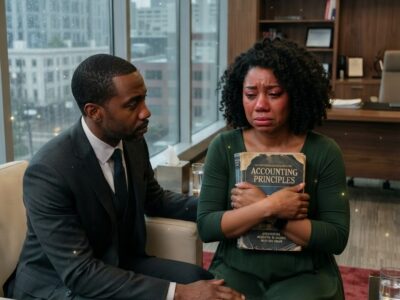
My Wife’s Boss Texted “How’s Our Son?” While I Held My Baby in My Arms
Part 1: The Kitchen Table
The sunlight hitting the breakfast nook in our Plano home was deceptive. It was that perfect, golden Texas Saturday morning, the kind that promised nothing but peace and simple chores. I was fifty-six, a man who had built Whitaker Freight Solutions from two leased trucks and a folding desk into a respectable Dallas empire. I had the respect of my employees, the comfort of a successful life, and, most importantly, I had Mason—my three-month-old son—sleeping soundly against my chest.
Kelsey had gone upstairs to shower. She had complained of exhaustion, and as any new father would, I believed her. Parenting is a marathon, and I was happy to take the early shift so she could get some relief. The kitchen was a snapshot of new-parent chaos: half-empty coffee mugs, a stack of diapers by a Target bag, and bottles drying near the sink. Everything felt right.
Then, her phone, resting on the kitchen table, lit up. A preview text from Grant Ellison, her boss. How’s our son today?
I froze. The hum of the refrigerator suddenly sounded like a roar in my ears. I read it once, then again, my heart stuttering in my chest. Our son? A second text arrived: Still can’t believe that old man thinks he’s the father.
My body went cold. It wasn’t a hot, blinding rage; it was an emptiness that hollowed me out from the inside. I looked down at Mason. His tiny hand was curled into my shirt, his breathing soft and rhythmic. I felt a surge of fear, sharper than the betrayal—because even in that moment, I knew I loved him. My hands shook as I unlocked Kelsey’s phone, her password still her mother’s birthday, unchanged for years. The thread was full of photos and jokes about me, calling me “grandpa dad.” Kelsey’s replies were passive, dismissive, as if my devotion was an inconvenience.
I took screenshots. Every single one. Then, with a trembling finger, I found the contact for Diane Ellison, Grant’s wife. I attached the screenshots and sent a message: You deserve to know what your husband is saying about my child.
I left the phone exactly where it was and sat back down, Mason still against my shoulder, waiting for the world to end. I didn’t know what would happen next, but the silence in the house felt heavy, like the air before a tornado. Suddenly, the doorbell rang. Twice. Hard. I checked the Ring camera. Grant Ellison was standing on my porch, jaw tight, fury radiating from him. My life had just split in half, and the first piece was about to crash into me.
Part 2: The Doorstep Confrontation
I walked to the foyer, shifting Mason carefully. When I opened the door, Grant didn’t look at me; he looked past me, scanning the house for Kelsey. When he realized it was just me, his face flickered with a mix of arrogance and irritation.
“Where’s Kelsey?” he demanded.
I stared at him. “Good morning to you, too, Grant.”
He stepped closer, his presence invasive. “Did you send those screenshots to Diane?”
“Yes.”
His face twisted. “You had no right.”
That was the spark. The cold shock evaporated, replaced by a slow, clean heat. “You texted my wife about my son from your phone, in my house, while I was holding him,” I said, my voice dangerously low.
“You don’t know what you’re doing, Rob,” he sneered, looking down at me as if I were a subordinate failing to hit a quota.
Before I could reply, I heard the light tread of footsteps on the stairs. Kelsey appeared, wearing a robe, her hair still wet. She froze when she saw Grant, her face draining of color. The silence was absolute, save for Mason beginning to fuss in my arms.
Grant snapped at her, “You left your phone out!”
He wasn’t sorry. He wasn’t panicked about us or the baby. He was blaming her for being careless. I looked at Kelsey, and for the first time, I didn’t see the woman I’d married four years ago. I saw a stranger.
“Grant, why are you here?” she whispered.
“I sent his wife the messages,” I told her.
Kelsey covered her mouth, her eyes wide with terror. Grant lunged, but I stepped back, shifting Mason away from his reach. “Don’t come into my house, Grant,” I said, my voice cold.
He smirked, a small, ugly expression. “Come on, Rob. A man your age should have known better.”
That hit home, but not for the reason he thought. It wasn’t about the age; it was the implication that I deserved this for being trusting. Kelsey started sobbing, begging for a chance to explain. I looked at the Ring camera above the door and said, “There’s a camera recording this porch, Grant. Leave before you give my attorney a better morning.”
He glared, realizing he had no power here. “This isn’t over,” he spat, turning toward his idling Mercedes.
I slammed the door and locked it. I stood in the silence, my chest heaving. Kelsey reached out for the baby. I stepped back, and her hand froze in midair. “Is he mine?” I asked. The silence that followed was more brutal than any confession. My world felt like it was dissolving, and I knew I had to make the call that would change everything.
Part 3: The Lab and the Lies
I handed Mason to the bassinet, my arms shaking too violently to hold him safely, and called Ellen Markham, my attorney of fifteen years. “I need a family lawyer, a DNA test, and someone who can preserve phone evidence,” I said. My voice was steady, but inside, I was screaming.
That afternoon, I drove to a lab in Frisco with Mason in the back seat. Kelsey begged to come, but I refused. I needed one hour where I wasn’t being lied to or manipulated. The waiting room smelled of antiseptic and disappointment. I held the carrier, watching Mason’s dark blue eyes study the ceiling. When the nurse took the swab, he fussed for a second, then settled immediately when I picked him up. The realization that he knew my voice, my scent, and my arms—regardless of biology—nearly destroyed me.
When I got home, Kelsey was waiting at the kitchen table, dressed in new clothes, as if she could curate a fresh start. “Where is he?” she asked.
“Asleep,” I said, walking to the sink.
“Grant shouldn’t have come here,” she tried.
“That’s your opening?” I turned to face her. “Try the truth.”
She folded her hands, her wedding ring catching the light. “It started last year. Work trips.”
“Before or after the pregnancy?”
She closed her eyes. “Before.”
The pain was a physical weight. I thought about the house, the bills, the nights I spent feeding him while she slept. “You were lonely?” I asked, my voice dripping with disdain. “In a five-bedroom house with a husband who worshipped you? That’s not loneliness, Kelsey. That’s entitlement.”
She didn’t deny it. And then, the front door opened again. Diane Ellison, Grant’s wife, walked in. She was composed, elegant, and looked like a woman who had already consulted a divorce lawyer. She didn’t cry. She sat us down and pulled out an invoice. It was for $18,500, paid to a consulting LLC in Kelsey’s name from one of Grant’s companies.
“My husband isn’t just careless with women, Mr. Whitaker,” Diane said, her voice like steel. “He’s careless with paperwork.”
My stomach turned. It wasn’t just the affair; it was the professional betrayal. My company, the one I had poured my soul into, was being exploited by my wife and her lover. I stood up. “No more explaining,” I told them both. “Not until the lawyers get here.”
But the nightmare wasn’t just in my home. As I stared at the invoice, I realized the fire had spread to my office, and my operations manager, Mike, was about to drop the next bombshell.
Part 4: The Spreadsheet Betrayal
The DNA results arrived on a Tuesday. I sat in my office at Whitaker Freight Solutions, the hum of forklifts and the smell of diesel usually grounding me. Today, they felt like background noise to the end of my life. I opened the email: Probability of paternity 0.00%.
I didn’t explode. I didn’t scream. I just stared at the screen, feeling a profound, heavy grief. The test didn’t erase the last three months, the late-night feedings, or the way Mason had smiled at me. But it shifted the landscape of my heart.
Mike Dorsey, my operations manager, knocked and entered with two coffees. He took one look at my face and stopped. “Not yours?”
“Not mine,” I said, pushing the paper toward him.
Mike sat down, his expression unreadable. He didn’t offer empty platitudes. He reached into his coat and pulled out a folder. “I wasn’t going to show you this until the test came back, but after what Diane showed you, I started digging.”
He opened the folder to reveal emails, route summaries, and vendor contracts. Grant’s company had been using our preferred vendors at discounted rates for three months. Someone had leaked our confidential pricing sheets.
“This came from Kelsey’s personal Gmail,” Mike said, pointing to an email. “And that consulting LLC Diane found? They’ve received six payments. Over $97,000.”
I walked to the window, watching my drivers—men and women who worked double shifts in the rain to build this company—moving pallets. Kelsey had traded their hard work for “attention.” She had treated the trust of hundreds of families like a currency she could spend on an affair.
“Who knows?” I asked.
“Diane knows,” Mike replied. “And whoever handled the invoices at Grant’s shop. Grant knew everything.”
I felt the shift. The personal pain was there, but it was now overshadowed by a cold, sharp resolve. This was war, but not the shouting kind. This was about documentation, evidence, and survival. My attorney, Ellen, and her team—a corporate compliance expert and a family lawyer—arrived that afternoon. We met in the conference room.
“We separate the personal from the corporate,” Ellen commanded. “We document everything. We don’t threaten; we expose.”
By 3:00 PM, we had a battle plan. I went home that night to find Kelsey in the nursery. She was singing to Mason. I stood in the doorway, the scene gut-wrenching. She looked up, saw the look in my eyes, and stopped.
“The test?” she whispered.
“Not mine,” I said, my voice dead. “And I know about the invoices, Kelsey. Pack your bags. You’re leaving.”
“Rob, please—”
“I’m not taking Mason,” I interrupted, “but you are no longer welcome in this house.” The house was quiet, but I knew the storm was just beginning.
Part 5: The Gala
Three weeks passed. I played the part Grant expected: the broken, prideful old man. I went to work, fed Mason, and met with lawyers. Diane and I met twice at a quiet coffee shop in Addison, mapping out the downfall of a man who thought he was untouchable.
The Dallas Business Leadership Luncheon was the target. Grant was scheduled to accept the “Family Values Business Leader of the Year” award. It was a joke, and we were going to make sure the punchline landed hard.
On the day of the event, I put on my best navy suit. I looked in the mirror and saw an older man, yes, but not a defeated one. I walked into the Adulphus Hotel ballroom, the air filled with the scent of expensive perfume and the low chatter of people who thought life was just about networking. I sat in the back with Diane.
Grant took the stage, glowing with fake humility. “A man’s name,” he announced to the room, “is only worth what his family believes about him.”
Diane stood. The chair scrap against the floor was loud enough to stop the room. She walked to the podium, folder in hand. Grant’s smile faltered.
“My husband is scheduled today to receive an award for family values,” Diane said, her voice steady. “Before that happens, I believe the council deserves accurate information.”
The room went deathly silent. Diane filed for divorce and dropped the financial records. Then, it was my turn. I stood and walked to the front. The room followed my every step.
“My name is Robert Whitaker,” I began, my voice carrying to the back of the room. “I’m not here to discuss my private life. I’m here because Mr. Ellison’s conduct crossed into my company and harmed my employees.”
Grant sputtered, “This is slander!”
I held up the evidence packet. “It’s documentation, Grant. Unauthorized use of vendor lists, kickbacks to a consulting firm tied to my wife, and business advantage gained through deceit.”
The president of the council, Margaret Lyall, opened the second folder I’d provided. Her face drained of color as she scanned the documents.
“Given the seriousness of the information presented,” she announced, her voice trembling, “the council will postpone today’s award—pending review.”
Postpone. In Dallas, that was the death knell. I watched the room erupt. Investors stood up and left. Contractors turned their backs. Grant looked around, his mask shattered, his power evaporating in real-time. As I walked past him, he leaned in and hissed, “You’ll pay for this.”
I stopped and looked him in the eye. “Send the invoice to my attorney,” I said, loud enough for the nearby tables to hear. Mike, sitting behind me, burst out laughing. Grant looked smaller than I had ever seen him.
Part 6: The New Normal
Six months later, life was different. I had moved into a modest home in Frisco. It wasn’t the sprawling estate in Plano, but it was mine. It was quiet, peaceful, and devoid of the lies that had infested my old life.
Whitaker Freight Solutions survived, though the path hadn’t been easy. The gossip in the industry had been brutal at first, but Howard Kim and Ellen had managed the legal fallout with surgical precision. Mike kept the yard running, often barking at anyone who brought up the past.
Grant’s world, however, had burned to the ground. His investors fled, his contracts evaporated, and the business community had effectively excommunicated him. Diane had divorced him, leaving him with nothing but a damaged reputation and a stack of lawsuits.
My divorce from Kelsey was finalized in August. It was clean and cold. She lost the Plano house and, more importantly, she lost the life she had tried to buy with my name.
Mason was the hardest part. The court had established Grant as the biological father, but the legal arrangements were messy. Kelsey had primary custody, but I had fought for and secured visitation. Every time I picked Mason up, it was a reminder of everything I had lost and everything I had tried to save.
One Saturday in September, I picked him up for a supervised visit at a park. He reached for me the moment he saw me—no politics, no DNA, just a baby recognizing his father. I held him and felt a surge of grief, but also a strange, new clarity. I had thought that victory was in the courtroom, in the exposé at the gala, or in the destruction of Grant’s career. But as I pushed the stroller under the cottonwood trees, I realized the victory was something else entirely.
Kelsey met me at the exchange. She looked exhausted, her high-gloss veneer gone. “He knows you,” she said, watching us.
“I know,” I replied.
“Do you hate me, Rob?” she asked, her voice cracking.
I looked at the woman who had burned my life to the ground and realized I didn’t feel hate anymore. Hate required energy, and I had none left for her. “I don’t hate you, Kelsey,” I said. “But I don’t trust you, and I don’t want my life tied to yours anymore.”
She nodded, the reality of her choices finally settling on her shoulders. I walked away, Mason’s small hand in mine, knowing that while the past was a ruin, the road ahead was finally, mercifully, mine to walk.
Part 7: The Final Lesson
Thanksgiving was quiet that year. No catered sides, no fake business talk, no performance. It was just me, Lauren, her husband, and Mike. My house felt peaceful. For the first time in years, I wasn’t waiting for the other shoe to drop.
A week before Christmas, I received a letter from Grant. It was three pages of apologies and excuses. Near the end, he wrote: “I convinced myself Rob was too old to really start over. I thought he needed the marriage more than the truth.”
I folded the letter and put it away. That was the core of their hubris. They thought my age was a weakness, that my loyalty was a cage I couldn’t escape. They had miscalculated the one thing that mattered: a man’s strength isn’t in what he owns, but in what he refuses to compromise.
On Christmas Eve, Kelsey called. She thanked me for the toy truck I’d sent Mason. “Rob,” she said, “I know I don’t deserve your kindness. Thank you for not disappearing from his life.”
“He didn’t do anything wrong,” I replied. “I’m doing this for him.”
I hung up and sat by the small tree Lauren had decorated. My life was smaller now. My net worth had taken a hit, my reputation had been through a ringer, and my heart had been broken. But as I sat there, I realized I was finally clean.
Revenge had given me back my name. The lawyers had protected the people who worked for me. The truth had saved me from a life built on a foundation of sand. But the real victory? The real victory was that I hadn’t let their cruelty turn me into the monster they expected me to be. I hadn’t become bitter. I hadn’t become reckless. I had stayed steady.
I watched the lights on the tree, thinking about the future. I had a freight company to run, a son to visit, and a life that was finally entirely my own. People look at my life now—a single man in a one-story brick house, working late hours, occasionally seen at a park with a toddler—and they see a tragedy. They see the man who lost his wife and his son.
But I see the man who stood up in a room full of sharks and told the truth. I see the man who didn’t let the world break him.
I stood up and walked to the window, watching the snow start to fall over the quiet Frisco street. I was fifty-six, then fifty-seven, and now, finally, I was ready for whatever came next. I was Robert Whitaker, and for the first time in my life, I was exactly where I was meant to be. I took a deep breath, smiled at the empty house, and went to bed. The past was closed, and for the first time in a very long time, I slept without dreaming of the lies. The nightmare was over. I was home.