My Son Nodded When His Wife Said They Wouldn’t Pay for My Meal—So I Taught Them a Lesson They’ll Never Forget
Part 1: The Separate Check
The restaurant was Megan’s idea. That is the part I kept turning over later, the way you turn a stone in your palm and find something crawling underneath. Not Carol’s idea. Not mine. Not Derek’s. Megan picked the restaurant, made the reservation, texted me the address, and added a little smiling emoji at the end like she was doing the family a kindness.
It was Mother’s Day, and my wife, Carol, got dressed up for it. She wore a pale blue blouse with tiny pearl buttons, black slacks, and the silver earrings I gave her on our fifteenth anniversary. She stood in front of the hallway mirror, checking if the earrings still caught the light. “They still look nice?” she asked.
“They look better than they did in 2008,” I said. She laughed, and that laugh filled the hallway. I remember thinking she looked happy. That detail would bother me later, because happiness makes humiliation sharper. You fall farther from it.
On the drive, the late afternoon sun came through the windshield in wide gold bands. Carol kept smoothing her blouse over her lap. She asked if I thought Derek would bring flowers. “He should,” I said.
“He forgets sometimes,” she offered gently.
“He’s forty-one,” I said. “He can remember Mother’s Day.”
The restaurant sat in a brick building downtown, smelling of garlic butter and expensive candles. Megan waved from near the bar. She was wearing cream-colored pants and a sleeveless green blouse that probably cost more than my first suit. She kissed the air near Carol’s cheek. “Happy Mother’s Day,” she said, bright and thin.
Derek hugged his mother with one arm, his phone still in his other hand. “Hey, Mom.” Carol held onto him an extra second. I saw it. He didn’t.
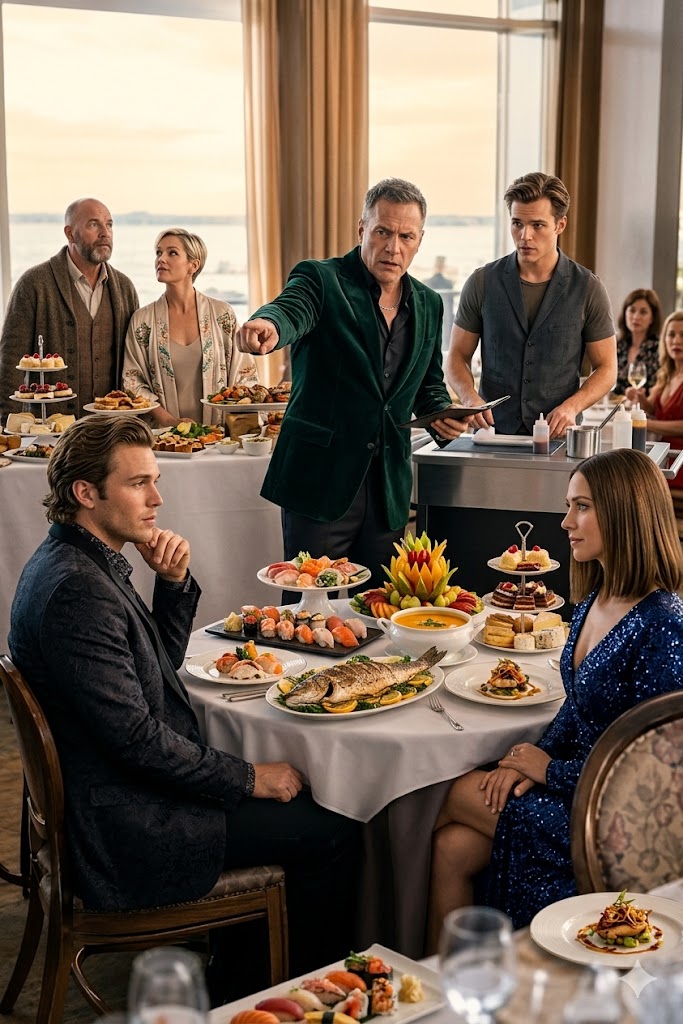
Our table was by the window. For the first few minutes, everything seemed normal. Derek ordered an appetizer before the waiter even finished introducing himself. Megan barely looked up from her phone. Then the waitress came to take our drink order. She was young, with tired eyes that still tried to be friendly.
Megan looked up and smiled. “Just so you know,” she said, casual as rain, “we’re not paying for them.” The waitress blinked. Megan tilted her chin toward Carol and me. “Separate check for her.”
Not us. Her.
The table went still. I looked at Derek. He didn’t look surprised. He nodded once, slow and deliberate, like a man confirming something already discussed. Carol’s hand tightened around the edge of her menu. I did not speak. Because in that second, I understood this was not an awkward mistake. It was a planned moment, and my son had agreed to it.
Carol lifted her water glass and took one slow sip. Her face stayed calm, but I saw the small tremor in her thumb. And as the waitress walked away, Megan leaned back with the faintest smirk, like she had just won a game I had not known we were playing.
Part 2: The Practicality of Exclusion
Derek started talking about work as if nothing had happened. He sliced through the silence like it was steak. “We finally got the Miller contract moving,” he said, reaching for the breadbasket. “Legal dragged their feet for weeks, but I think we’re good now.”
Carol nodded because politeness was muscle memory for her. “That’s good, honey.” Honey. She still called him that after what he had allowed. She buttered a piece of bread with careful little strokes, as if the knife needed her full attention.
Megan laughed at something Derek said. Her laugh had changed over the years. When we first met her, it had been quiet. Now it was brighter, harder, designed to land. I had known Megan for four years. At first, she was polite. Then the little exclusions began. A family brunch where Megan’s mother was invited but we weren’t. A Christmas Eve plan changed at the last minute to include fifteen of her friends but not us.
When Carol mentioned it, she never complained. She said things like, “Maybe I misunderstood.” Derek never corrected anything. I had been waiting to see when Derek crossed that line. That Mother’s Day, he crossed it before the drinks came.
The waitress returned with iced tea for Carol, a beer for Derek, white wine for Megan, and coffee for me. When she set Carol’s glass down, she gave my wife a quick look. Not pity exactly. More like recognition. I hated that. I hated that a stranger had seen my wife reduced to a separate check on Mother’s Day.
Megan clicked her nails against her wineglass. “So, Carol, have you thought any more about downsizing?”
Carol looked up. “Downsizing?”
“The house,” Megan said. “It’s a lot for two people.”
Derek took a long drink of beer. I felt something cold move through my chest. Carol smiled faintly. “We’re comfortable there.”
“Oh, I’m sure,” Megan said. “It just seems like a lot of unused space.”
“Our memories use most of it,” Carol said. I looked at her then. She was still gentle, but there was steel under it. Megan heard it too. Her smile thinned.
Derek cleared his throat. “It’s just practical, Mom. Big yard, taxes, maintenance.”
Six weeks before that dinner, Derek had called me on a Tuesday night—a day he never called—asking about retirement, investments, and whether our will was updated. At the time, I thought maybe he was being responsible. Then two weeks later, Megan invited Carol to lunch. Just the two of them.
“How was lunch?” I had asked Carol afterward. She had looked at me with a bewildered expression.
“She spent the whole hour telling me how expensive it is to live in the suburbs,” Carol had whispered. “She said Derek was worried about our ‘liquid assets.'”
I should have called him then. I should have asked what kind of game he was playing. But I didn’t want to start a war. I didn’t want to be the overbearing father. I sat there in the restaurant, watching my son drink his beer, realizing that the war had already started, and he was the one holding the map.
Part 3: The Price of a Meal
The entrées arrived. Derek had ordered the porterhouse, Megan the seared scallops, Carol a simple garden salad with salmon, and I opted for the roast chicken. The food was beautiful, arranged with a precision that felt insulting given the context.
“You know,” Megan said, ignoring her scallops for a moment to fix Carol with a piercing gaze, “we were looking at that assisted living community in Oak Creek. The one with the concierge service? It’s perfect for people at your stage.”
Carol stopped chewing. She put her fork down. “My stage?”
“Well,” Megan said, waving a hand in the air, “the golden years. You shouldn’t be worrying about mowing the lawn or fixing a roof at your age. It’s an unnecessary burden.”
“We enjoy the garden,” I spoke up, my voice tight. “We’ve worked on it for twenty years.”
“Of course you have,” Megan said, her tone dripping with mock sweetness. “But time moves on. Derek is just concerned that if something happens to the house, or to… well, to health matters, you won’t be positioned well.”
I looked at Derek. He was staring at his steak, focused entirely on the cut of the meat. “Is that what this is, Derek?” I asked. “Are you worried about our ‘position’?”
He looked up, his eyes hard. “I’m looking at the reality of the situation, Dad. You guys are getting older. The house is a liability. It’s draining your equity.”
“It’s our home,” Carol said softly. “It’s where you grew up.”
“And I appreciate that,” Derek said, his voice rising just enough to draw a look from the table next to us. “But you can’t live in a house made of nostalgia. You need to be liquid. If you sold, you could put that money into a trust. It would be safer.”
Safe. They kept using that word. As if our life was a dangerous gamble they were trying to rescue us from.
“We never asked for help,” I said.
“That’s because you’re too proud,” Megan countered. “But Derek is a son. He worries.”
“I worry about your future,” Derek added. “I don’t want to be the one dealing with a dilapidated property if… if things happen.”
I looked around the restaurant. There were people everywhere enjoying the day, but I felt like I was in a cage. Megan and Derek were carving us up, piece by piece, under the guise of concern. And Carol sat there, taking it. She looked smaller than she had an hour ago, her pale blue blouse looking fragile in the harsh restaurant lighting.
Then, Megan did something that pushed me over the edge. She reached over and touched Carol’s arm. “You’re lucky to have us thinking about this for you, really. Most people have to deal with these transitions all by themselves.”
She was framing her greed as a gift. She was telling my wife that she should be grateful for being pushed out of her own life. I opened my mouth to say something—something that would burn the table to the ground—when Carol reached out and covered Megan’s hand with her own.
“You’re right, Megan,” Carol said, her voice shaking slightly. “It is a lot to think about.”
I looked at Carol in shock. She was conceding. She was letting them win. Megan’s eyes lit up with a predatory victory.
“I’m so glad you see it our way,” Megan breathed.
“However,” Carol continued, “we have decided to keep the house. We’ve already signed a contract for a new roof, and I’m planting a new row of hydrangea bushes next week.”
Megan’s hand stiffened under Carol’s. “A new roof? That’s a waste of money.”
“It’s an investment,” Carol said, pulling her hand away. “In our home.”
The silence returned, but this time, it was different. Megan was furious. She leaned back, her face flushing. Derek looked at his mother with a strange, dark expression. I realized then that they weren’t just here to talk. They had a plan, and Carol had just thrown a brick into their gears.
Part 4: The Bill Arrives
The rest of the meal was a blur of superficial small talk and simmering hostility. Megan barely spoke, her silence now pointed and aggressive. Derek seemed distracted, checking his phone repeatedly, his thumbs tapping rapidly on the screen. I watched them both, feeling an icy calm settle over me. I wasn’t going to let this happen. I wasn’t going to let them manipulate Carol out of the life we had built.
When the waitress returned, she looked hesitant. She had clearly been instructed on how to handle our table. She placed a small folder in the center and walked away quickly.
“I’ll get it,” Derek said, reaching for the folder. He opened it, looked at the numbers, and then pulled out a credit card. “Actually, Megan and I have a meeting, so we need to head out soon.”
“We’re not done with our coffee,” I said.
“You guys can stay,” Derek said, standing up. “We’ve taken care of the bill.”
He laid the card down, but he didn’t put the folder back in the middle of the table. He leaned over and whispered something to the waitress when she came back to collect the card. I couldn’t hear what he said, but I saw the waitress’s face fall.
When she returned, she held two separate receipts. She laid one in front of Derek and one in front of me.
“Everything is settled,” she said, her voice tight.
Derek and Megan didn’t even look at us as they gathered their things. “Happy Mother’s Day, Mom,” Derek said, his voice clipped. “Think about what I said. Really think about it.”
They walked out of the restaurant without a backward glance.
Carol looked down at the receipt in front of me. It was the bill for our meals. The total was nearly two hundred dollars.
“I’m sorry, Carol,” I said, reaching for my wallet. “I should have put a stop to this.”
“It’s okay,” she said, her voice very quiet. “I think… I think I’ve seen enough.”
I looked at the bill. It wasn’t just the fact that they had made us pay for our own Mother’s Day meal. It was the coldness of it. The transactional nature of a relationship that should have been based on love.
“Let’s go home,” I said.
“No,” Carol said, her expression hardening. “I want to finish my coffee.”
She looked out the window at the setting sun. She wasn’t the fragile woman who had been bullied into silence anymore. There was something different in her eyes—a resolve I hadn’t seen in years.
“What are you thinking?” I asked.
“I’m thinking about the hydrangea bushes,” she said. “And I’m thinking about the will.”
I felt a chill. “The will?”
“Derek asked if it was updated,” she said. “I think it’s time we did that.”
She wasn’t going to fight them with shouting or tears. She was going to fight them with the one thing they couldn’t control: our independence. I felt a surge of pride so strong it made my eyes sting. She had stood her ground, and now, she was going to secure it.
“Whatever you want,” I said. “I’m with you.”
“I know,” she said, finally smiling at me—a real, genuine smile. “I’ve always known.”
But as we finished our coffee, I noticed the manager standing near the hostess stand, watching us. He was a tall man, impeccably dressed, and he kept glancing at the empty chairs where Derek and Megan had sat. He seemed to be waiting for something.
“Everything alright?” I asked the waitress when she came by.
She looked at me, her eyes filled with a sudden, sharp empathy. “I’m so sorry about your son.”
“It’s not your fault,” I said.
“I’ve been working here for ten years,” she said. “I’ve seen a lot of things. But I’ve never seen anyone do that to their own mother.”
“Neither have I,” I whispered.
As we stood to leave, the manager walked over. He stopped in front of our table, his face unreadable. “Sir, ma’am? Could I have a moment?”
“Is there a problem?” I asked.
“No, sir,” he said. “Quite the opposite. I just… I felt I should apologize for the atmosphere today.”
He looked at Carol. “Happy Mother’s Day, ma’am.”
“Thank you,” Carol said.
“Your son and his wife,” the manager said, his voice dropping. “They left a… note. For the staff.”
My heart hammered. “A note?”
“Yes,” the manager said. “It was addressed to the manager, demanding that we never allow ‘those people’—meaning you—to make a reservation here again. They didn’t want to risk running into you in the future.”
The words hit me like a physical blow. They hadn’t just insulted us; they had tried to erase us from the public sphere. They had tried to ban us from our own community.
I looked at Carol. She didn’t cry. She didn’t look defeated. She just stared at the manager. “I see,” she said. “Thank you for telling us.”
As we walked out into the cool evening air, I felt a heavy weight lift off my shoulders. They were gone. They had shown their true colors, and they had banished themselves from our lives. I took Carol’s hand, and we walked toward the car, ready to start the rest of our lives.
But the night wasn’t over. As we reached the car, a black sedan pulled up behind us. The window rolled down, and there was Derek.
“Dad,” he said, his voice cold. “We need to talk.”
Part 5: The Final Straw
The sedan idling behind us seemed to suck the warmth right out of the evening. Derek sat in the driver’s seat, his face shadowed by the dim streetlights. Megan was in the passenger seat, staring straight ahead as if we didn’t exist.
“Talk about what?” I asked, my grip tightening on Carol’s hand.
“The house,” Derek said, his voice flat. “You didn’t listen to what we said. You’re making a mistake, and I’m not going to sit back and watch you throw away your future.”
“Our future is our business,” Carol said, her voice steady. “Not yours.”
Megan let out a sharp, incredulous laugh. “Your future is our business because we’re the ones who will have to clean up the mess when you can’t manage anymore!”
“We can manage just fine,” I said, stepping toward the window. “What you really mean is that you’re worried about your inheritance. You’re worried that the house will be a drain on the money you think you’re entitled to.”
Derek’s face tightened. “That’s not it, Dad. I want you to be safe. I want you to be in a place where you’re taken care of.”
“We are taken care of,” Carol said. “We have each other.”
“That’s not enough!” Megan snapped. “You’re living in the past! You’re hoarding space and money that could be used to build something real for us!”
I looked at my son, and for the first time, I felt nothing but pity. He had become a hollow man, filled with nothing but the desire for more. He didn’t care about his mother; he didn’t care about me. He only cared about the bottom line.
“You want to know what’s real?” I asked. “What’s real is that you just insulted your mother on Mother’s Day. What’s real is that you tried to ban us from a restaurant because you were embarrassed to be seen with us.”
Derek looked startled. “How did you know about that?”
“The manager told us,” I said.
Derek glanced at Megan, his jaw clenching. “That was just… it was just a way to avoid conflict.”
“Conflict?” Carol laughed—a sad, broken sound. “You call trying to exile your parents ‘avoiding conflict’?”
“You guys just don’t get it,” Derek said, putting the car into gear. “You’re living in a fantasy world. And when that world comes crashing down, don’t come to me.”
“We wouldn’t dream of it,” I said.
As the car pulled away, I felt a strange sense of finality. The ties had been severed, not by us, but by them. I looked at Carol. She was staring at the tail lights, her eyes glistening.
“He’s really gone, isn’t he?” she whispered.
“He’s been gone for a long time, Carol,” I said. “We’re just finally seeing it.”
We got into our car, and as we drove home, the city felt different. It was still the same city, but the illusions had been stripped away. I knew that the road ahead would be difficult. I knew there would be moments of doubt and loneliness. But as I glanced at Carol, I saw the strength in her profile, the way she held her head.
When we got home, the house felt different, too. It was our sanctuary, our history, our life. And for the first time, I realized that it was enough. We didn’t need Derek’s approval. We didn’t need Megan’s fake sweetness. We had each other, and we had the truth.
I helped Carol inside and sat her down in her favorite chair. She looked tired, but she was smiling.
“You know what?” she said. “I think I’m going to take a nap.”
“Good idea,” I said.
As she closed her eyes, I went into the office and pulled out our files. It was time. I was going to secure everything. I was going to make sure that they never had a say in our lives again. I was going to protect the home, the garden, and the life that they had tried so hard to take from us.
But as I looked at the files, my phone buzzed. It was an email from Derek.
Subject: Regarding your decision.
Dad, I’m giving you one week to rethink the house. If you don’t list it, we’re going to have to take legal action. We have power of attorney concerns that need to be addressed. We’ll be in touch.
Power of attorney. They were trying to declare us incompetent.
I felt a surge of rage so hot it made my hands shake. They weren’t just trying to bully us; they were trying to take our autonomy. They were trying to frame us as people who couldn’t make our own decisions.
I stood up and walked to the window. The house was quiet, filled with the shadows of the past. But I wasn’t going to let them win. I would fight them with every resource I had. I would call our lawyer first thing in the morning. I would protect my wife, and I would make sure that they never, ever touched our lives again.
I felt a hand on my arm. Carol was standing beside me, looking at the screen. She didn’t look scared. She looked angry—a cold, calculated anger that I had never seen before.
“Legal action?” she whispered.
“They’re trying to take control,” I said.
She looked at me, her eyes dark and determined. “Then let them try. They have no idea what they’re up against.”
And in that moment, I knew that we were ready for whatever they threw at us. The gloves were off, and we were going to win.
Part 6: The Legal Battlefield
The next morning, the sun rose with a harsh clarity, as if it were highlighting every crack in the foundation of my life. I called our lawyer, Sarah, a woman who had been a family friend for years. She was a pit bull in a silk suit, and when I told her what Derek was threatening, her voice went deadly quiet.
“They want to take power of attorney?” she asked, her voice incredulous. “Based on what? A Mother’s Day argument and a refusal to sell a house?”
“They’re desperate,” I said. “They think they can scare us.”
“They don’t know who they’re dealing with,” Sarah said. “Meet me at my office at ten. Bring every document you have—the house deed, the health directives, everything.”
Carol and I sat in Sarah’s office, the room smelling of old books and expensive coffee. Sarah flipped through our files, her brow furrowing with every page.
“They have nothing,” Sarah said, finally looking up. “Derek’s claims are based entirely on his perception of your ‘declining mental state,’ which is laughable. Unless he has a doctor’s report—which he clearly doesn’t—this is just harassment.”
“What can we do?” Carol asked.
“We go on the offensive,” Sarah said. “We draft a cease-and-desist letter. And we start documenting everything. Every call, every email, every interaction. If they keep pushing, we file a restraining order for harassment.”
Restraining order. The words felt heavy, final. But I knew it was necessary. Derek and Megan had crossed a line, and there was no going back.
As we left the office, I felt a weight lifting. We were no longer victims; we were active participants in our own defense. But the cost was high. We were fighting our own son.
Over the next few weeks, the tension escalated. Derek sent more emails, each one more aggressive than the last. He threatened to cut us off from the grandkids—a threat he made knowing full well how much Carol loved them.
“He’s going to use them against us,” Carol whispered one night, tears streaming down her face.
“We won’t let him,” I said, holding her tight. “We’ll do whatever it takes to see them. We’ll go to court if we have to.”
But then, a surprise. I received a call from an old friend, a former colleague of Derek’s who had heard rumors about his “new investment strategy.”
“I thought you should know,” he said. “Derek is in trouble. He leveraged his firm on that Miller contract, and it fell through. He’s desperate for cash, and he’s dragging anyone he can into his schemes.”
It all made sense. The pressure to sell the house, the “worry” about our finances—it wasn’t about us. It was about him. He was drowning, and he was trying to use our assets to bail himself out.
I shared this with Sarah, and her eyes lit up. “If he’s in financial trouble, we have even more leverage. We can expose his instability to the board of his firm.”
“I don’t want to destroy him,” I said.
“You’re not destroying him, John,” Sarah said. “He’s destroying himself. You’re just protecting your own interests.”
That night, Carol and I sat in the living room, the house silent around us. We looked at the photos on the mantle—Derek as a baby, as a graduate, as a young man with his whole life ahead of him. Where had he gone? Who had he become?
“Do you think he knows?” Carol asked. “Does he know what he’s doing?”
“I don’t think he cares,” I said.
“That’s the saddest part,” she whispered.
But as I looked at her, I saw a resolve that I hadn’t seen before. She was finally done being the sweet, supportive mother who was taken for granted. She was a woman who was protecting her own dignity, her own home, and her own peace.
“Let’s do it,” she said.
We authorized Sarah to move forward. We were going to fight back, and we were going to win. And as we sat there in the quiet of the evening, I realized that we were stronger than we had ever been. We were no longer the parents who were waiting for a son who was never coming home. We were the masters of our own destiny.
But the real test was yet to come. Derek wasn’t the type to just back down. He was going to fight with everything he had, and I knew that our relationship with him—the one that had lasted forty-one years—was truly, finally, over.
Part 7: The Final Confrontation
The courtroom was cold, its air thick with the scent of floor wax and judgment. Derek sat at the defense table, his suit perfectly tailored, his face a mask of calculated calm. Megan sat beside him, her hands clasped, her eyes darting around the room with a nervous, predatory energy.
Carol and I sat at the plaintiff’s table, Sarah by our sides. The judge, a stern woman with piercing eyes, watched as the lawyers presented their arguments. Sarah was a force of nature, presenting the documents, the emails, and the evidence of Derek’s financial desperation.
“Your Honor,” Sarah said, her voice echoing in the room, “Mr. Cole’s actions are not those of a concerned son. They are the actions of a man who sees his parents as nothing more than assets to be liquidated to satisfy his own poor business decisions.”
Derek shifted in his seat, his jaw set. Megan looked like she wanted to scream, her fingernails digging into the table.
“We have evidence,” Sarah continued, “that Mr. Cole has been misrepresenting his financial situation to his board, and that he has been pressuring his parents to sell their home to cover his losses.”
The judge looked at Derek, her expression darkening. “Is this true, Mr. Cole?”
Derek stood up, his voice steady but strained. “Your Honor, that is a gross misrepresentation. I was only concerned for my parents’ future.”
“Then why,” the judge asked, “did you attempt to declare them incompetent without a single medical professional’s assessment?”
Derek faltered. He looked at the judge, then at us. For a brief moment, the mask slipped, and I saw the scared, greedy little boy he had become.
“They… they weren’t listening,” he whispered.
“They don’t have to listen to you,” the judge said, her voice sharp. “They are adults. And you have no right to interfere in their lives.”
The judge ruled in our favor within an hour. The request for power of attorney was denied, and the restraining order was granted. The court room was silent as the gavel fell. It was over. We had won.
But as we walked out of the courtroom, I didn’t feel like a winner. I felt a hollow, aching emptiness. We had won the battle, but we had lost our son.
Derek and Megan were waiting by the elevator. They didn’t look at us. They just turned and walked away, disappearing into the crowded hallway.
“It’s over, Carol,” I said, putting my arm around her.
“I know,” she said, her voice hollow.
We walked out of the building and into the bright, indifferent afternoon. The city was moving, the people were rushing, and the world was continuing as if nothing had happened. We got into the car, and for a long time, we just sat there, listening to the hum of the engine.
“What now?” Carol asked.
“Now,” I said, “we go home. We go home, and we tend to the hydrangeas.”
We drove back to our house, and as we pulled into the driveway, the garden was in full bloom, the flowers vibrant and strong. It was the home we had built, the home that had survived everything.
We walked inside, and the house felt different—still quiet, but no longer haunted. We had finally, truly, made it our own. We had protected it, and we had protected each other.
I looked at Carol, and she looked at me, and for the first time in a long time, we were at peace. The war was over, the battle had been won, and we had finally, after forty-one years, found our own truth.
I took her hand and led her into the garden. The hydrangeas were blooming, their blue and purple petals a testament to our persistence, our resilience, and our love. We sat on the porch, watching the sun set over the yard, and for the first time, I felt like we were home. Not just in a house, but in our lives. We were free. And we were together. That, I realized, was the only inheritance that had ever really mattered.